Wondering whether you should buy the house or buy the lot? In Forest Hills and Green Hills, that question can shape your entire strategy. If you are looking at a teardown, renovation, or long-term land play, the real opportunity often comes down to what the site can actually support. Let’s look at how to evaluate lot value, buildability, and risk before you make a move.
Why lot-first thinking matters here
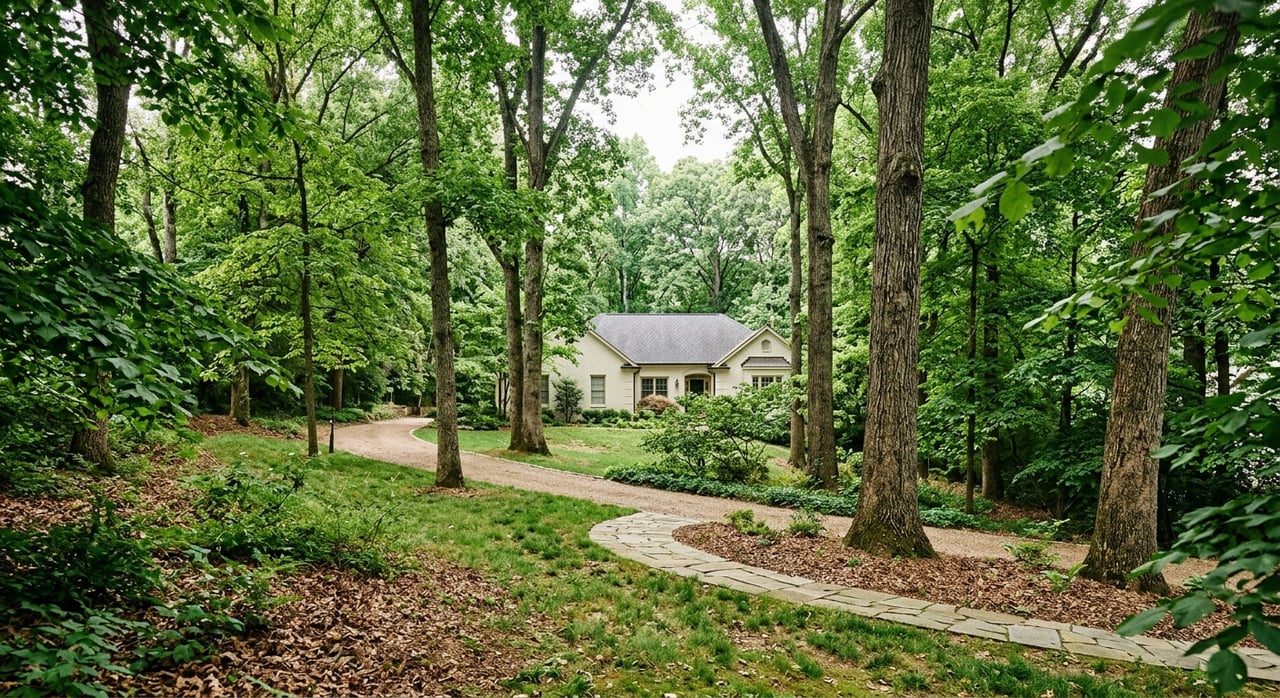
Forest Hills and Green Hills may sit in the same broader Nashville area, but they reward very different buying strategies. In Forest Hills, the local framework strongly protects a residential setting defined by open views, rolling hills, and mature tree canopy.
The City of Forest Hills describes itself as almost entirely residential, and high-density housing is prohibited. Its zoning and preservation materials place clear emphasis on scenic vistas, environmental features, and the natural character of the land. That means the site itself often matters just as much as the existing home.
Green Hills is more parcel-specific. Metro Nashville’s planning framework shows a more varied context, including multiple Urban Design Overlays and a planning approach that can differ from one block or corridor to the next.
For you as a buyer, that creates a simple takeaway. In Forest Hills, privacy, topography, and usable land often drive the conversation. In Green Hills, lot value may depend more on where the parcel sits and what redevelopment path the zoning and overlay structure allows.
Forest Hills lot value starts with the land
A large lot in Forest Hills can look compelling at first glance. But size on paper does not always equal a simple build.
Forest Hills residential standards include minimum lot areas ranging from 1 to 6 acres, minimum lot widths from 100 to 250 feet, and relatively deep setbacks with low coverage and floor area ratio limits. Those rules can significantly shape the true building envelope.
The city also has an Open Space Subdivision option for larger development sites. That path starts with a 10-acre site, requires one-acre minimum lots, 30% preserved open space, and concept-plan approval.
If you are evaluating a parcel in Forest Hills, the most important question is not just how many acres it has. It is how much of that land is practically buildable once zoning, slope, access, and environmental constraints are factored in.
Overlays can change the equation
Forest Hills has both Floodplain Protection and Hillside Protection overlays. The hillside overlay is specifically intended to maintain the natural topographic character of the land.
That matters because overlay rules apply in addition to base zoning. If the overlay standard is stricter, the more stringent rule controls.
So even if a parcel appears generous, the buildable area may narrow quickly. Slope, tree canopy, floodplain conditions, and land-form restrictions can all affect what you are able to do with the site.
Permits may apply sooner than you expect
In Forest Hills, construction is not the only trigger for review. The city states that even land-form changes may require a permit.
Plans are reviewed by the Building Official and City Manager, with possible added review by the City Engineer. If a proposal does not comply, a variance may be required.
For a lot-first buyer, that makes early due diligence essential. A site that feels like a strong value can become much more complex if grading, driveway placement, or hillside conditions limit your options.
Green Hills lot value depends on the block
Green Hills can require a different lens. Instead of one broad neighborhood pattern, you are often evaluating the specific block, street type, and whether the parcel sits in an interior residential setting or along a more flexible corridor.
Metro’s planning context for Green Hills/Midtown includes multiple Urban Design Overlays, and the Green Hills UDO is focused on a compact, pedestrian-oriented urban village along selected commercial corridors. That does not mean every Green Hills parcel carries the same potential.
In Green Hills East, Metro staff described the neighborhood pattern as one- and two-story houses on previously subdivided lots, often with local streets that do not connect broadly and with many areas lacking sidewalks. The zoning noted in that area included RS10 and R10, both requiring 10,000-square-foot minimum lots.
For you, this means an interior lot may tell a very different story than a parcel on a collector-edge street. Two properties with similar dimensions can have very different long-term value depending on planning context.
Collector-edge parcels may differ
Metro staff specifically noted that Belmont Boulevard and Shackleford Road were excluded from a proposed Green Hills East conservation overlay because collector avenues may offer more development opportunity and improved connectivity than interior neighborhood streets.
That is an important clue for a lot-focused buyer. Street position can matter almost as much as lot size.
A parcel along a collector edge may offer a different redevelopment outlook than one tucked inside a quieter residential block. Before you assume a lot has future upside, verify the current parcel rules and surrounding context carefully.
How to check zoning before you buy
The first stop in Metro Nashville should be Parcel Viewer. Metro says it pulls parcel information from the Property Assessor, Register of Deeds, Planning Department, Codes, and other Metro sources.
When you review a parcel, focus on the current zoning code rather than inactive code references. Then review the land-use table, bulk standards, and street setback rules.
This matters in both Forest Hills and Green Hills because base zoning is only part of the story. Overlays and parcel-specific rules can materially change what is allowed.
Look for overlays and SP rules
Metro zoning guidance explains that overlays can add restrictions or special rights beyond the base district. Examples include Neighborhood Conservation Zoning Overlays, Historic Preservation Zoning Overlays, Urban Design Overlays, and Urban Zoning Overlays.
You should also check whether the parcel is governed by a Specific Plan, often called SP zoning. Metro states that SP zoning is adopted by both the Planning Commission and Metro Council and can include property-specific rules that differ from the surrounding area.
That means you should never assume the lot next door sets the standard. In some cases, a single parcel may operate under a more customized rule set.
Verify proposed versus adopted rules
One caution point in Green Hills is especially relevant. The Green Hills East Neighborhood Conservation Overlay case, BL2025-1175, was withdrawn by the Planning Commission on April 23, 2026.
For you, the lesson is simple. Do not treat a proposed overlay as if it is already in force.
Always verify the current parcel record before making assumptions about what can or cannot be built. In neighborhoods where planning discussions evolve, current status matters.
Questions to ask with a lot-first strategy
If you are buying with the land in mind, a few questions can save you time, money, and frustration.
- What is the exact current zoning district?
- Are there overlays, SP conditions, or inactive historic codes attached to the parcel?
- What is the real buildable envelope after setbacks, height rules, coverage, slope, tree preservation, floodplain, easements, and driveway access are considered?
- Is the existing house the main asset, or is the lot the true asset?
- If you plan to rebuild, will the project fit the block’s existing context, or could it trigger overlay review, a variance, or rezoning?
- If the site is part of a potential subdivision or assemblage, what concept plans or plat approvals may be required?
These questions are especially important in Forest Hills, where topography and overlays can quickly narrow a site’s usable footprint. They also matter in Green Hills, where location on the block may shape future flexibility.
How to think about lot value versus house value
A smart way to frame the purchase is to decide whether the structure is the asset or the land is the asset. That sounds simple, but in these neighborhoods the answer can shift dramatically from one property to the next.
In Forest Hills, a home may sit on a beautiful site that still presents meaningful development limits because of slope, floodplain, setbacks, or overlay restrictions. In that case, the lot may be valuable, but only within a narrower use case than the listing suggests.
In Green Hills, lot value often hinges on parcel position. An interior neighborhood lot may support one path, while a corridor-facing or collector-edge parcel may support another.
The bigger point is this: not every teardown is a strong land buy. The lot’s true value depends on what can be built, how complex approvals may be, and whether the site aligns with your long-term goals.
Why early guidance matters
When you are buying in a high-value area, it is easy to focus on finishes, square footage, or curb appeal. But if your strategy is tied to land, those features are only part of the picture.
In Forest Hills and Green Hills, entitlement risk should be part of the conversation early. The smartest buyers study the lot before they fall in love with the house.
That is where a high-touch, detail-driven process can make a real difference. If you want help evaluating a site, understanding how a parcel fits the local framework, or narrowing down opportunities that align with your goals, Chrisley & Co. can guide you through a private consultation.
FAQs
What does buying for the lot mean in Forest Hills and Green Hills?
- It means you are evaluating the property based on land potential, buildability, and zoning context, not just the current house.
Why is topography so important in Forest Hills?
- Forest Hills has hillside and floodplain overlays, and those rules can reduce the practical buildable area even on large lots.
How can I check zoning for a Green Hills property?
- Metro Nashville says Parcel Viewer is the best starting point because it combines parcel data from several Metro departments.
Do overlays matter when buying land in Davidson County?
- Yes. Overlays sit on top of base zoning and may add restrictions or special rights that affect what you can build.
Are all Green Hills lots the same from a redevelopment perspective?
- No. Parcel location matters, and collector-edge properties may differ from interior neighborhood lots in planning context and potential flexibility.
What should I verify before buying a teardown in Forest Hills?
- You should confirm current zoning, overlays, setbacks, slope conditions, floodplain limits, easements, driveway access, and whether permits or variances may be needed.