
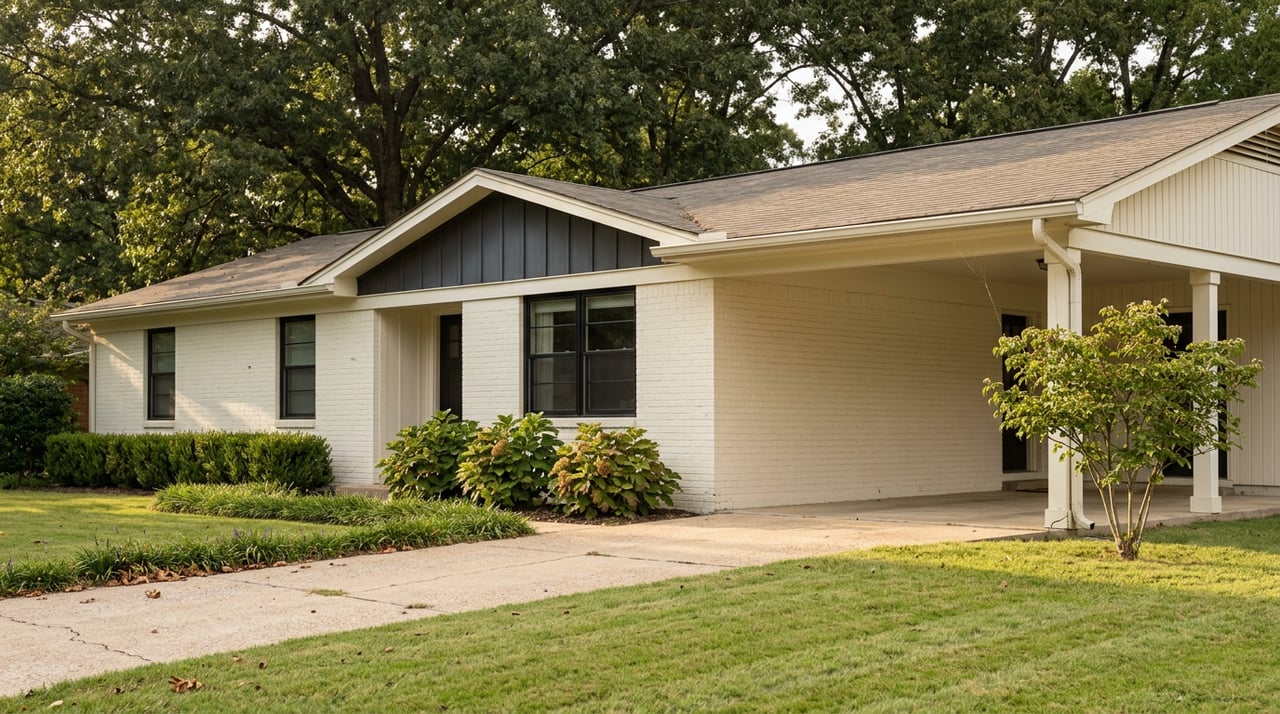
You close on the ranch. Maybe it's on Battery Lane, maybe Overton Lea Road, one of those quiet streets where a full acre of shade trees and a mid-century roofline are the whole pitch. The seller's disclosures mention nothing unusual. Your inspector flags the predictable things: an aging roof, a water heater on its last few years. You call a contractor, tell them you're ready to pull permits, and start planning the kitchen.
That's usually where the surprise shows up. Because the permit for that kitchen, and for the addition you're already sketching, doesn't come from the same office that handles permits three blocks away in Green Hills or across the line in 12 South. Oak Hill is its own incorporated city. It has its own Codes Department, its own inspection sequence, and its own rulebook for what you can build and how tall you can build it. Most buyers find this out after they're under contract, not before.
The City Inside The City
Oak Hill covers roughly 8 square miles in southern Davidson County, bordered by 12 South and Green Hills to the north, Brentwood to the south, Crieve Hall to the east, and Forest Hills along its western edge. It's a real municipality with its own elected government, not a marketing label for a nice pocket of Nashville. Its zoning permits single-family homes almost exclusively. Churches and schools can locate there only with a conditional use permit and a minimum of 6.42 acres. There are no businesses, no multi-family buildings, no commercial corridors at all. Even the Tennessee Governor's Residence, which sits inside city limits, is about as close to commercial activity as Oak Hill gets.
That tight zoning is part of what keeps lots large and streets quiet along corridors like Franklin Pike, Lealand Lane, Evans Road, and General Gates Drive. It's also why the city runs its own permitting office rather than deferring to Metro Nashville's. The Oak Hill Codes Department operates out of 5548 Franklin Pike, Suite 101, and handles plan review, pre-application meetings, and permit issuance through its own appointment system. If your renovation plans meet the city's zoning ordinances and building codes, and your fees and any required bonds are in place, the city issues the permit directly. This is not a Metro Nashville function delegated to a satellite office. It is a separate approval chain.
One Project, Two Permit Offices
Here's the part that trips people up. Oak Hill's Codes Department handles the structural side of a renovation or new build: pre-development inspection, foundation inspection, framing inspection, insulation inspection, and the final sign-off. But mechanical, electrical, and plumbing permits, the trades most contractors touch first, are pulled through Metro, not through the City of Oak Hill. One renovation, two separate permitting authorities, each with its own process and its own inspector.
Add to that a few Oak Hill-specific requirements that don't exist elsewhere in the county. Once your building permit is issued, a permit board has to be physically staked in the front yard, visible from the street and roughly 20 feet back from the curb, for the duration of construction. Erosion control and tree protection measures must be inspected before work even starts. And if you want to serve as your own general contractor rather than hiring one, Oak Hill allows a "Self-Build or Owner" permit, but it makes you personally responsible for every requirement and every inspection in the process.
None of this is disqualifying. It just means the timeline you'd expect for a comparable renovation inside Metro Nashville proper doesn't transfer cleanly to Oak Hill. Budget for coordination between two offices, not one.
Height Zones, Lot Depth, and the Stormwater Tiers
Oak Hill's building code also ties what you can build to how deep your lot runs, not just its square footage. The city's height zone system caps flat-roof accessory structures at one floor and 18 feet in certain zones, while allowing up to two floors in others. One of the more specific rules: Height Zone 3 doesn't apply at all to lots with a depth under 200 feet. If you're eyeing a rebuild on a shallower in-town lot near the Forest Hills line versus a deeper parcel further out toward Brentwood, the ceiling on what you can add literally depends on that measurement.
Stormwater adds another layer. Renovation and new construction projects fall under the city's Regulated Residential Infill Guidelines, which require a stormwater management plan calibrated to project tier, with specific treatment measures detailed in the code's appendix. This isn't a box-checking formality. It determines drainage design, grading, and in some cases where you can and can't place a pool or an addition relative to your lot's natural runoff path.
If you're buying a renovation candidate rather than a move-in-ready estate, get your contractor and the Oak Hill Codes office talking before you remove financing contingencies, not after.
What The Median Price Doesn't Tell You
In the twelve months of sales data reported in early 2026, homes in Oak Hill sold anywhere from $250,000 up to $8,450,000, with a median sale price of $1,687,500. About a quarter of all sales closed under $1 million. On paper, that looks like a market split between modest homes and trophy estates. It isn't, really. Most Oak Hill lots run 1 to 2 acres regardless of price point, with some parcels stretching past 7 acres. The homes themselves range from renovated mid-century ranches to fully custom builds, often standing on comparably sized land.
What actually separates the $650,000 sale from the $3 million one down the same street more often than not is how much of the renovation and permitting work has already been done. A home that's been through Oak Hill's dual permit process, brought up to current stormwater and height zone compliance, and had its plumbing and electrical modernized carries a different price simply because the next owner doesn't have to do that work. A home still running original systems and untouched by the current code carries the discount, and the buyer inherits the permitting timeline along with it.
That's the real spread in this market. It isn't about neighborhood prestige within Oak Hill. It's about how much of the bureaucratic and infrastructure work has already been absorbed by a previous owner.
The Pipes Under The Package
Older Oak Hill homes, particularly those in the established sections closer to Franklin Road, often still carry original galvanized or early copper supply lines. Restricted crawl spaces and partial slab sections are common, which makes any repiping work slower and more expensive than a standard suburban job. On the drain side, mature hardwood root systems, a defining feature of Oak Hill's landscaping, are also a leading cause of collapsed or partially compromised clay sewer laterals. Intermittent sewage odors, slow drains that come and go, and small backups after heavy rain are frequently traced back to root intrusion rather than anything visible from inside the house.
None of this shows up in a standard walk-through inspection. A sewer lateral camera inspection, done at the point of purchase rather than years later, is the only reliable way to know what you're inheriting underground before you start planning what goes on top of it.
Four Questions Worth Asking Before You Close
- Has the seller pulled any permits through the Oak Hill Codes Department in the last five years, and are those closed out with final inspections on file?
- What is the lot's measured depth, and which height zone does that place it in for any addition or accessory structure you're planning?
- Has a sewer lateral camera inspection ever been done on this property, and if not, can one be scheduled before closing?
- If you plan to act as your own general contractor, are you prepared to be the point of contact for both the Oak Hill Codes office and Metro's trade permit system?
FAQ
Does every renovation in Oak Hill require sign-off from both Oak Hill and Metro? Structural work, additions, and new construction go through the City of Oak Hill's own Codes Department. Mechanical, electrical, and plumbing trade permits are pulled through Metro. A single renovation project typically touches both.
Can I act as my own general contractor on an Oak Hill project? Yes. Oak Hill allows homeowners to pull a Self-Build or Owner permit, which makes the homeowner responsible for coordinating every inspection and requirement in the process rather than delegating that to a licensed contractor.
What should I do if I discover a septic or sewer issue after closing? Get a licensed inspector to camera the lateral line and confirm whether the issue is root intrusion, a failed connection, or something requiring excavation. Older Oak Hill properties with mature tree cover are more prone to this than newer construction elsewhere in the county.
Oak Hill rewards buyers who do the homework before they close, not after. If you're weighing a renovation candidate here, or trying to figure out what a lot's depth and zoning actually allow before you fall in love with the floor plan, Chrisley & Co. can walk the permitting math with you before you write the offer. Schedule a private consultation and bring the address.